Residential Setting

Social and Emotional Learning in Residential Settings

Learning together, living together—this is the beating heart of the residential learning program. We define “Residential Setting” as the place where the program unfolds outside of direct field instruction. This includes the activities that fill the interstitial moments between lessons at a Residential Environmental Learning Center (RELC): meals, cabin life, free time, service learning, campfires, and so forth. When students, teachers, parent chaperones, and teen cabin leaders not only spend their days in instructional time, but also share meals, sleeping quarters, and free time, even more opportunities exist for social and emotional learning (SEL).

Many components of residential life can support SEL without intentional design; the tools and resources in this site can help program leaders intentionally create opportunities for students to practice their SEL competencies and skills. Strengthened social bonds, increased self-efficacy, advances in self-management, opportunities for responsible decision-making are just some of the likely outcomes of the residential learning environment.
Reflection Tool

Click here to be guided through an internal assessment of how your RELC is designed to support SEL during time outside of the field day.

Access It Here

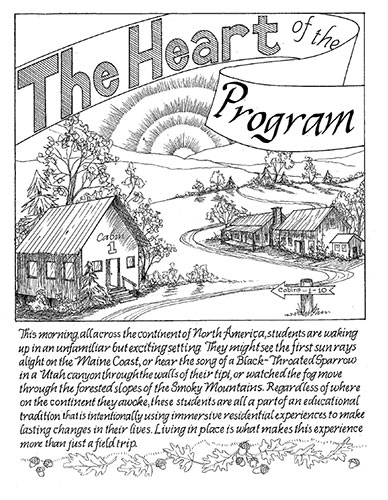
The Heart of the Program

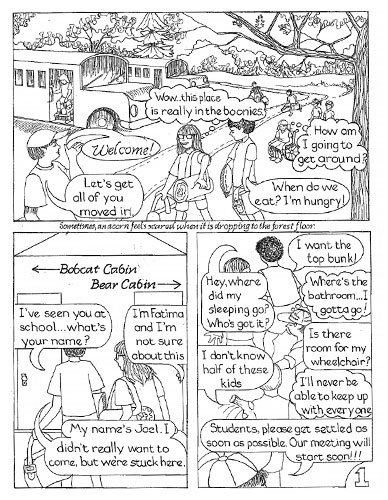
We created a graphic novel to illustrate the social and emotional growth that occurs in the interstitial moments throughout the day at a RELC.

Click below to view online or you can download the pdf here.

The Heart of the Program
Download PDF
book icon

Tools

Many components of residential life can support SEL without intentional design; the tools and resources below can help program leaders intentionally create opportunities for students to practice their SEL competencies and skills. Strengthened social bonds, increased self-efficacy, advances in self-management, opportunities for responsible decision-making are just some of the likely outcomes of the residential learning environment.
School Group Welcome and Orientation with SEL Activities: Activities to support student SEL during large group welcome and orientation.
Weather Programming & SEL: RELCs typically offer programming in remote, outdoor settings; incorporating weather observations and predictions can be an easy way to support student SEL. These activities are well-suited to dining hall or large group settings outside of the field day.
 Supporting SEL in Living Quarters: Ideas for ways to support student SEL in shared living spaces.
 Student-Centered Campfire Activities: Campfire and evening drama programs are key components of residential programs. These activities support student SEL development through leadership and student voice.
 Roles & Responsibilities: Students visiting a RELC can contribute to the caretaking of the site in a number of ways.
  Supporting Transgender and Gender Expansive Youth in RELC Settings: RELCs have historically operated on binary gender systems. There are ways you can support transgender and gender expansive youth even within these systems, leading toward increased safety and inclusion, which are core components of SEL.
Dining Hall Food Waste: Social and Emotional Learning and Math?: Ideas for how to support SEL and mathematical skills by measuring food waste and setting goals for reducing waste during dining hall meals.